What to Do After a Car Accident in Montana
September 22, 2026
After a car accident, get safe, call 911 if anyone may be hurt, and stay at the scene until an officer says you are free to go. Then take photos, get checked by a doctor, and tell your own insurer what happened. Before you give a recorded statement or sign anything, talk to a lawyer.
A crash leaves you shaken, hurt, and unsure what comes next. You don’t have to sort it out alone. This guide covers the first steps in order. Each section links to a deeper guide. Our Billings and Missoula offices help people across Montana, from city streets to icy highways.
In this guide
- First steps at the scene
- When you must report a crash
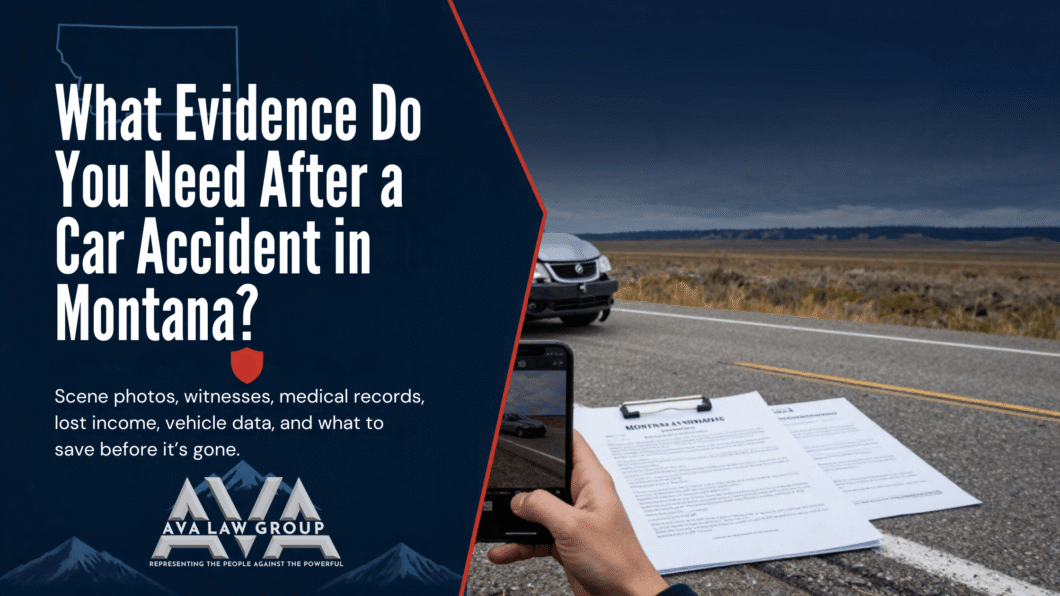
- Evidence to save
- Insurance calls
- Shared fault
- Coverage that may apply
- Settlement offers
- Deadlines
- When to call a lawyer
First steps at the scene
Your safety is the primary concern, so ensure you are safe before you begin any of these steps. Move out of traffic. Call 911 if anyone is hurt, a vehicle blocks the road, or the scene feels dangerous. Winter roads, rural highways, and wildlife on the road add risk in Montana, so get well off the road when you can.
Stay at the scene. Montana law requires you to give your name, address, and vehicle registration, and to show your license if asked. You must also help anyone who is hurt. If someone is injured, or the crash must be reported, you must stay until an officer gives you permission to leave. The law lets you leave only to get emergency care for someone or to report the crash.
Then photograph the vehicles, damage, plates, road, signs, debris, and weather. Get each driver’s name, contact information, and insurance details. Ask witnesses for their phone numbers. Give officers the facts as you know them. Don’t guess about speed, distance, or fault.
See a doctor if you have pain, dizziness, numbness, confusion, or any other symptom. Some injuries don’t show up for hours or days. Your health comes before evidence.
Do you have to report the crash?
Often, yes. Call police, the county sheriff, or the Highway Patrol right away if anyone is hurt or killed, or if the damage looks like $1,000 or more. Inside city limits, call the local police. Outside a city, call the sheriff or the nearest Highway Patrol office.
Treat $1,000 as the line. A repair bill can quickly exceed it, even after a crash that looks minor. You may also need to file a written report with the state within 10 days. You can skip it if an officer investigated and reported the crash. Our Montana car accident reporting requirements guide explains the rules and how to get your crash report.
Save the evidence
Photos, contacts, crash report number, medical records, bills, repair estimates, pay records…all things you should have in your files. Save texts, emails, and letters from every insurance call. Write down your symptoms and daily limits as they happen.
Keep original files. Don’t crop or edit them. Don’t repair or scrap a badly damaged vehicle until someone has asked whether it should be inspected. Nearby video can be erased quickly. Use our Montana car accident evidence checklist so you don’t miss anything.
Handle insurance calls carefully
Tell your insurer about the crash promptly. Keep it short and factual; don’t speculate. Our guide to how Montana car accident insurance claims work covers adjusters, statements, and next steps.
Shared fault in Montana
You can still recover if you share some blame. Montana allows a claim as long as your fault isn’t greater than the combined fault of the people you’re pursuing. In a two-driver crash, that means 50% or less. Your payout drops by your percentage.
Don’t accept an adjuster’s early fault percentage as final. Read more about being partly at fault in a Montana car accident.
Coverage that may apply
Montana requires drivers to carry at least $25,000 for one injured person, $50,000 for two or more, and $20,000 for property damage. A serious crash can cost far more. Other coverage may help, including your own collision, medical payments, or uninsured motorist coverage. Employer, commercial, rideshare, umbrella, and household policies can also apply.
Most Montana auto policies must include uninsured motorist coverage unless the named insured rejected it. See our guides to Montana car accident laws and what to do if the other driver is uninsured.
Before you accept a settlement
An early offer can come before you know how long you’ll need treatment or how much work you’ll miss. A signed release usually ends your claim for good. First, review your full losses, all available coverage, and any medical liens. Our guide explains whether to accept a Montana car accident settlement.
Deadlines
Most Montana injury and wrongful death cases must be filed in court within three years. Property damage claims have a shorter deadline of two years. Claims against a government agency have extra steps. Your insurance policy can also set notice deadlines that arrive much sooner. Don’t wait to find out which one applies to you. See the full list of Montana car accident deadlines.
When to call a Montana car accident lawyer
Talk to a lawyer when any of these apply:
- Injuries are serious.
- Fault is disputed.
- Several vehicles or policies are involved.
- A commercial or government vehicle may be responsible.
- Evidence could disappear.
- An insurer asks for a recorded statement, a broad medical authorization, an exam, or a release.
We can review the crash, identify coverage, and explain your options under Montana law. Learn how a Montana car accident lawyer can help, or visit our Montana personal injury lawyer page.
Frequently Asked Questions
Get to a safe place, call 911 if anyone may be hurt, and check for injuries. Stay at the scene until an officer says you can go. Exchange information and collect evidence only when it’s safe.
Not if someone is hurt or the crash must be reported. Stay until an officer gives you permission. You may leave only to get emergency care for someone or to report the crash.
Yes, when anyone is hurt or killed or the damage looks like $1,000 or more. Call right away. A written report may be due within 10 days unless an officer investigated and reported the crash.
You can share basic facts. But you generally don’t owe the other driver’s insurer the same cooperation your own policy may require. Get legal advice before a recorded statement or a detailed talk about your injuries or fault.
Three years for most injury claims and two years for property damage. Some claims have shorter deadlines or extra steps. Have your deadline checked early.
Possibly. You can recover if your fault isn’t greater than the combined fault of those you’re pursuing. Your award is reduced by your percentage.
Get a Free Case Review
Hurt in a crash and not sure what to do next? Tell us what happened. We’ll review the evidence, the insurance that may apply, and your options under Montana law.
Call us any hour at (800) 777-4141 or request your free case review online. Your review is confidential. There are no upfront fees, and we collect attorney fees only if we recover compensation for you.
Sources: MCA 61-7-103, 61-7-105, 61-7-108, 61-7-109, 61-6-103, 27-1-702, 27-2-204, 27-2-207, 33-23-201 (Montana Code Annotated).
Legal disclaimer: This page gives general information, not legal advice. Reading it or contacting us does not create an attorney-client relationship. Deadlines and outcomes depend on the facts. Past results do not guarantee a similar outcome.